
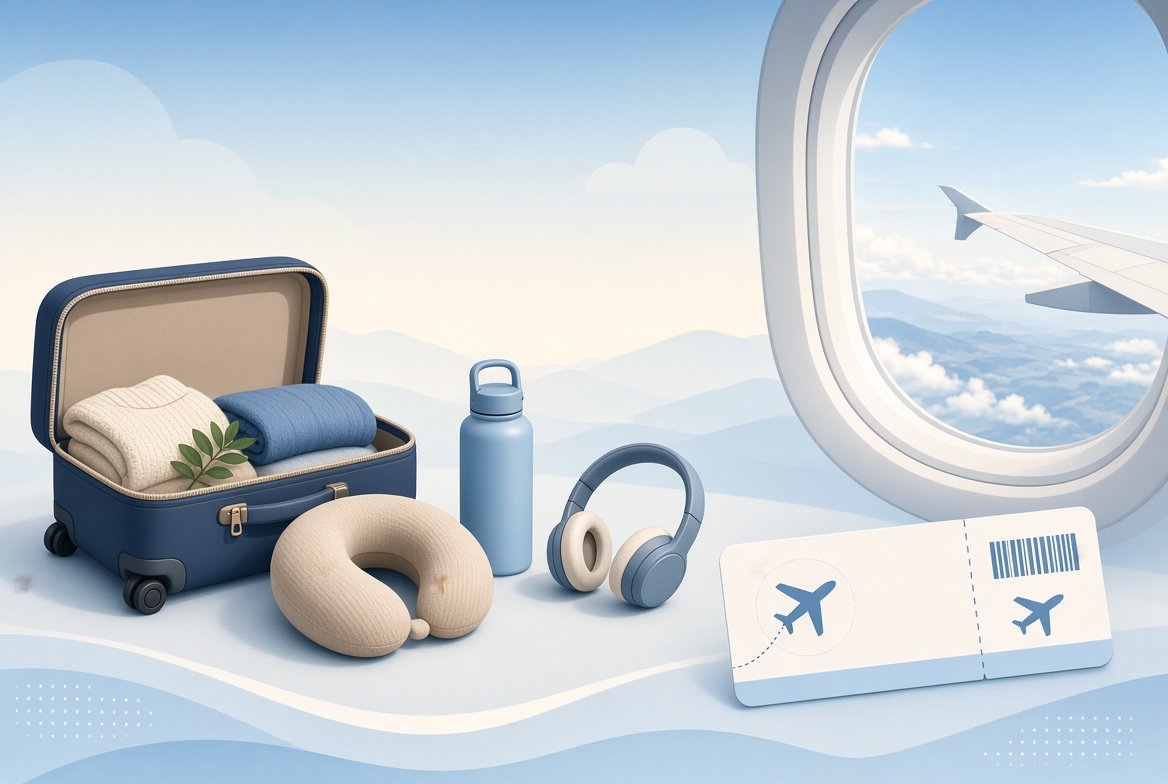
A long flight can feel tiring, but good preparation makes it much easier. This guide shows how to prepare for a long flight, from documents and packing to sleep, comfort and staying healthy in the air.
The tips work for most flights of four hours or more, and they are written for first-time travelers too.
Before You Fly
1. Check Your Documents Early
Make sure your passport is valid, and check whether your destination needs a visa or other entry rules. Many countries require your passport to be valid for a certain period after you arrive, so look at the rules for your destination.
Keep digital and paper copies of your passport, ticket and hotel booking in separate places.
2. Choose Your Seat Wisely
- Aisle seat: easier to stand up and walk.
- Window seat: a place to lean for sleeping, and you will not be disturbed by people passing.
- Seats near the front or over the wing: usually feel less bumpy.
3. Check In Online
Online check-in saves time and lets you choose your seat. Download your boarding pass to your phone, and keep a printed copy in case of battery problems.
4. Prepare Your Phone and Devices
Download movies, music, books and maps for offline use. Charge all devices, and bring a portable charger if your airline allows it.
It is also a good idea to back up your phone before a trip, in case it is lost or stolen. Our guide on how to back up your iPhone shows how.
What to Pack in Your Carry-On
- Passport, ID, boarding pass and cards
- Any medicines you take, in their original packaging
- A refillable water bottle, empty when you pass security
- Snacks, such as nuts or fruit bars
- A light sweater or scarf, because cabins can be cold
- Earplugs or noise-canceling headphones
- An eye mask and a neck pillow
- Lip balm, moisturizer and eye drops, as cabin air is dry
- A change of clothes, in case your checked bag is delayed
- A pen for forms
Pack essential items in your carry-on, not in checked luggage, and follow your airline’s rules for liquids and size.
On the Day of Your Flight
Wear Comfortable Clothes
Choose loose, layered clothing and comfortable shoes that are easy to take off at security.
Arrive Early
Give yourself plenty of time, especially for international flights.
Be Careful With Airport Wi-Fi
Airports have public Wi-Fi, but you should be careful about what you do on it. See our guide on whether it is safe to use public Wi-Fi for online banking.
During the Flight
Stay Hydrated
Cabin air is very dry. Drink water regularly. Limit alcohol and too much caffeine, because they can leave you feeling more tired.
Move Regularly
Sitting for many hours can slow blood flow in your legs. Travel of four hours or more can slightly increase the risk of blood clots, so it helps to move:
- Walk up and down the aisle every one to two hours, when it is safe to do so.
- Do ankle circles and foot pumps in your seat.
- Stretch your legs and shoulders.
If you are at higher risk, for example because of a past blood clot, pregnancy or surgery, ask your doctor about extra steps, such as compression socks.
Sleep If You Can
If it is night time at your destination, try to sleep. Use an eye mask, earplugs and a neck pillow. If it is daytime there, try to stay awake to help your body clock adjust.
Eat Light
Heavy, salty meals can make you feel bloated. Choose lighter food, and eat at times that match your destination.
How to Reduce Jet Lag
- Change your sleep schedule a little before you travel, if you can.
- Set your watch to the destination time as soon as you board.
- Get daylight at your destination, which helps reset your body clock.
- Avoid long naps on the first day.
- Be patient. It can take a few days to adjust.
Health and Safety Tips
Check health advice for your destination well before you travel. In the United States, the CDC Travelers’ Health pages list vaccines and health notices by country.
Also consider travel insurance, and keep emergency contacts in your phone and on paper.
Frequently Asked Questions
How early should I arrive for a long international flight?
Many airlines suggest arriving about three hours before an international departure. Check your airline’s advice.
Should I wear compression socks?
They can help some people, especially those at higher risk. Ask your doctor if you are unsure.
How can I sleep better on a plane?
Use an eye mask, earplugs and a neck pillow, wear loose clothes and avoid heavy meals and alcohol before sleeping.
Can I bring food on a plane?
Usually yes, but there may be rules, especially when you cross borders. Check the rules of your departure and arrival countries.
How do I beat jet lag?
Adjust your schedule, get daylight at your destination and give your body a few days to adapt.
Conclusion
To prepare for a long flight, sort your documents early, pack smart, choose a comfortable seat and keep your phone ready. During the flight, drink water, move often and rest when you can.
A little planning before you leave can make the journey calmer, and you will arrive in better shape.