
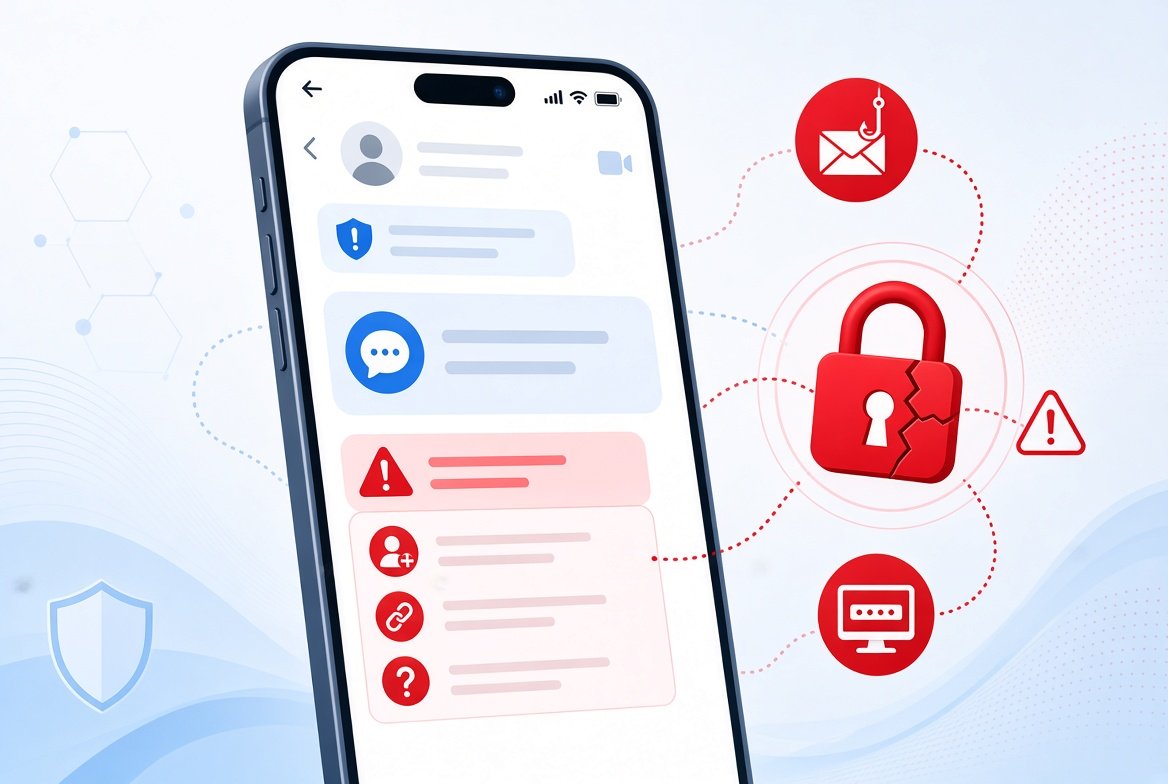
Scam texts are now a daily problem. Learning how to tell if a text message is a scam can protect your money and your personal information.
This guide shows the warning signs, the most common tricks, and what to do if you already clicked.
How to Tell if a Text Message Is a Scam
Scam texts often look urgent and official. But they usually share a few warning signs.
1. It Creates Panic or Pressure
Scammers want you to act before you think. Messages like “Your account will be closed today” or “Act now” are red flags.
2. It Comes From an Unknown Number
A text from a number you do not know, or an odd-looking email address, should make you careful. Scammers can also fake names, so do not trust a message just because of a familiar name.
3. It Asks You to Click a Link
Be very careful with links in unexpected texts. The link may lead to a fake website that steals your details or installs harmful software.
4. It Asks for Personal or Payment Details
Real banks and companies do not ask for your password, PIN or full card number by text.
5. It Asks for Strange Payment Methods
Gift cards, cryptocurrency and wire transfers are favorite payment methods for scammers, because the money is very hard to get back. Any request to pay this way is a major warning sign.
6. It Has Spelling Mistakes or Odd Wording
Mistakes are not always there, but they are common. Treat strange grammar or a vague greeting like “Dear customer” with suspicion.
7. It Sounds Too Good to Be True
Surprise prizes, free gifts and easy money offers are common bait.
Common Text Scams to Know
- Package delivery scams: a message says a delivery failed and asks you to click a link to fix it.
- Bank fraud alerts: a fake message says there is a problem on your account and asks you to “verify” your details.
- Fake toll or fine notices: a text claims you owe money and must pay right away.
- Wrong-number texts: a stranger starts a friendly chat, then slowly steers you to an investment or romance scam.
- Fake job offers: an easy, high-paying job appears from nowhere.
- Prize and gift card messages: you “won” something you never entered.
What to Do When You Get a Suspicious Text
- Do not click any links or open attachments.
- Do not reply, not even with “STOP”. Replying can confirm your number is active.
- Check directly. If the message claims to be from your bank or a delivery company, open the official app or type the website address yourself. You can also call the number printed on your card or the official website.
- Report it (see below).
- Delete and block the number.
How to Report a Scam Text
In the United States, you can forward the message to 7726 (which spells SPAM) with your mobile carrier. This helps carriers block similar texts.
You can also report it to the Federal Trade Commission at ReportFraud.ftc.gov. Many phones also have a built-in “Report Junk” or “Report spam” option.
What If You Already Clicked or Replied?
Do not feel embarrassed. Many smart people get fooled. Act quickly:
- Do not enter more information on the page. Close it.
- Change your passwords for any account you entered, and for any other account that uses the same password.
- Turn on two-factor authentication. See our guide on what two-factor authentication is.
- Call your bank if you shared card or account details, or if you sent money.
- Watch your statements for charges you do not recognize.
- Check if your email was leaked. Follow our steps on how to check if your email has been in a data breach.
Simple Habits That Keep You Safe
- Pause before you react to any urgent message.
- Never share verification codes sent to your phone.
- Keep your phone software updated.
- Talk to older family members about common scams.
Frequently Asked Questions
Can I get hacked just by receiving a text?
Usually no. The danger starts when you click a link, open a file, or share information. Simply receiving a text is rarely harmful.
Why do scammers have my number?
Numbers can come from data breaches, public listings, or random dialing. Many scam texts are sent to huge lists of numbers at once.
Should I reply “STOP” to scam texts?
No. Replying can tell the scammer your number is real and active. Delete, block and report instead.
Conclusion
To tell if a text message is a scam, look for urgency, unknown senders, links, requests for private details and odd payment methods.
When in doubt, do not click. Contact the company yourself using an official app or website, then report and delete the message.