
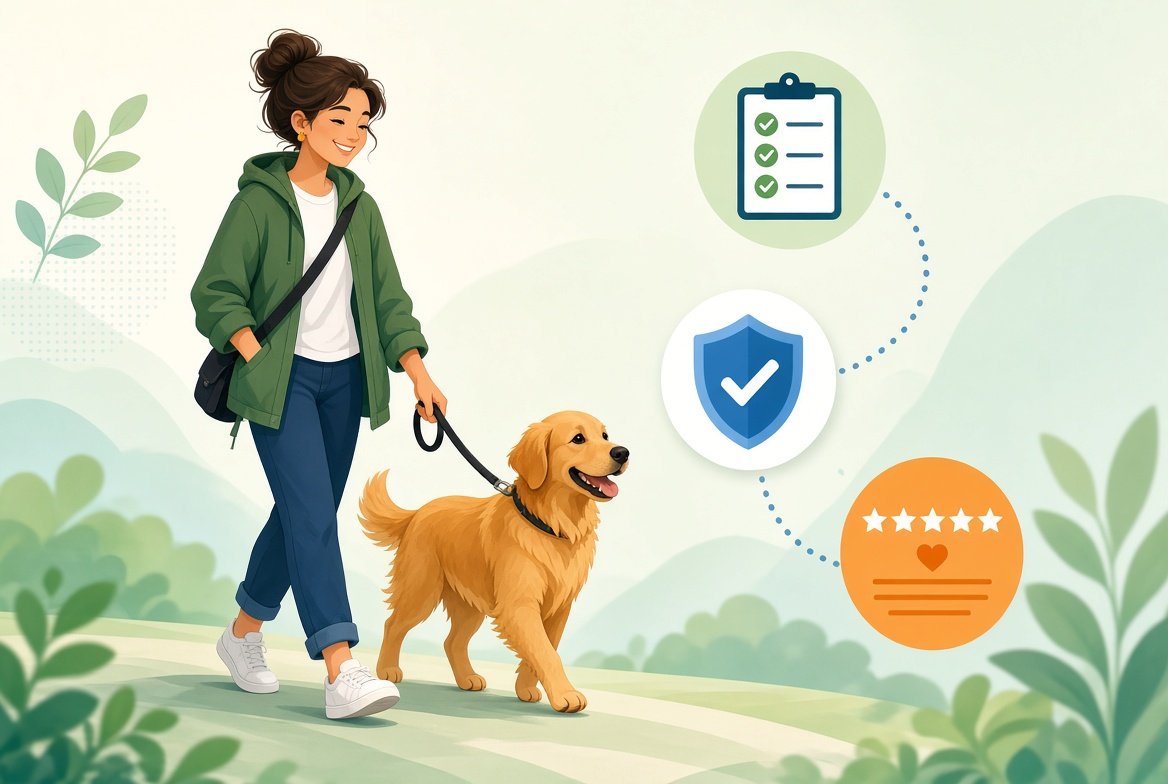
If you work long hours or travel often, a dog walker can be a big help. But you are trusting this person with your dog, and often with the keys to your home. This guide explains how to choose a dog walker, what to check and which questions to ask.
Take your time. A good match makes life easier for you and happier for your dog.
Why Hire a Dog Walker?
- Your dog gets exercise and a toilet break during the day.
- It can reduce boredom and destructive behavior.
- It helps puppies and older dogs who cannot wait for long hours.
- It gives you peace of mind when you are away.
Types of Dog Walkers
Independent Walkers
One person who runs their own service. You often deal with the same person each time, and they may offer more personal care.
Agencies or Companies
A company with several walkers. They may offer backup if your regular walker is sick, and some have formal procedures and insurance.
App-Based Services
Platforms where you book walkers online. They can be convenient, but the quality and checks vary, so read what each platform actually verifies.
How to Choose a Dog Walker: Step by Step
Step 1: Decide What You Need
Think about how often you need walks, how long, and at what times. Consider your dog’s age, size, energy level and health. A senior dog and a young, strong dog need very different care.
Step 2: Ask for Recommendations
Ask neighbors, friends, your vet or local pet shop. Personal recommendations are often the best starting point.
Step 3: Check Experience and References
Ask how long they have been walking dogs and whether they have experience with dogs like yours. Ask for references from current or past clients, and contact them.
Step 4: Check Insurance and Safety Measures
Ask whether they carry liability insurance, and whether they have first-aid training for pets. Ask what they would do in an emergency, such as an injury or a lost dog.
Step 5: Arrange a Meet and Greet
Meet the walker at your home, and see how your dog reacts. Watch how the walker handles your dog. Good walkers are calm, patient and attentive.
Step 6: Do a Trial Walk
Start with one or two short walks. Ask for a report afterwards. Many walkers send a short message or a photo.
Questions to Ask a Dog Walker
- How many dogs do you walk at the same time?
- Do you offer solo walks as well as group walks?
- What equipment do you use, such as leashes and harnesses?
- How do you handle pulling, barking or aggression?
- What happens if my dog is injured or gets loose?
- Which vet will you contact in an emergency?
- What is your cancellation policy?
- How will you keep me updated?
- Who looks after my dog if you are sick?
- How do you handle my house keys?
Red Flags to Watch For
- The walker refuses to meet your dog first.
- They walk too many dogs at once for good control.
- They cannot give references.
- They use harsh methods or are not gentle with dogs.
- They are vague about insurance or emergency plans.
- Your dog seems scared or stressed when the walker arrives.
Cost
Prices vary a lot by city, length of walk and whether the walk is solo or in a group. Ask for a clear price list, and check what is included. The cheapest option is not always the best choice, but the most expensive is not always better either.
How to Prepare Your Dog and Home
- Make sure your dog has an ID tag and a secure collar or harness. A microchip is also a good idea.
- Keep vaccinations up to date. Some walkers or groups require proof.
- Tell the walker about health issues, fears and favorite commands.
- Leave clear instructions on feeding, water and where the leash is kept.
- Share your vet’s contact information and an emergency contact.
Keeping Your Home and Information Safe
If the walker enters your home, think about security. Give a spare key only to someone you trust, and note who has copies. Consider a smart lock that lets you change codes. Avoid sharing more personal information than necessary.
For general pet care advice, you can also visit the ASPCA website.
Frequently Asked Questions
How often should a dog be walked?
Most adult dogs need at least one or two walks a day. Puppies, active breeds and older dogs may need different amounts. Ask your vet.
Should I choose solo or group walks?
Solo walks give more individual attention. Group walks can be social and cheaper, but they suit well-behaved, friendly dogs.
Do dog walkers need insurance?
It is wise to hire a walker who has liability insurance. Ask to see proof.
What if my dog does not like the walker?
Give a few visits to build trust. If your dog remains stressed, try another walker.
Can a dog walker be a security risk?
It is possible, so check references and use trusted people. Consider a smart lock or a key box.
Conclusion
To choose a dog walker, decide what you need, ask for recommendations, check experience, references and insurance, and arrange a meet and greet and a trial walk.
Trust your instincts and watch your dog’s reaction. A good walker makes your dog’s day happier and gives you peace of mind.